QR codes with serial numbers personalize each product, increasing supply chain traceability and minimizing counterfeits. A QR code with a serial number also enhances Digital Product Passports (DPPs) at an individual level.
You can create GS1 Digital Link QR Codes at a product-level, a batch-level, or an item-level. Most products receive product-level codes. QR codes with a GS1 Digital Link enable you to scrap 2D barcodes for good and store GTIN information and product information, including serial numbers, in one code.
Brands that haven’t made the transition to Sunrise 2027 yet can still use regular dynamic QR codes on packaging with serial numbers. What’s important is that the item is digitally identifiable in a unique way for purposes like warranty, registration, anti-counterfeiting, and authenticity.
QR codes with serial numbers vs. barcodes
Barcode QR Codes simply carry more information. You can provide customers with links to product info, repeat purchases, increase post-purchase engagement, and personalize each QR code with a serial number, registration number, a warranty with a fixed date for that particular unit, etc.
This enhances smart packaging by adding links that comply with DPPs, so brands don’t need to print barcodes and QR codes side by side on product packaging.

Creating QR codes with serial numbers in bulk is easy to do
Bulk QR codes on packaging can be created all at once in a bulk QR code generator. You simply download the .csv from our QR code generator, fill in the information, upload the .csv, design your QR codes and landing page, and that’s it! The GTINs and serial numbers you wrote into the spreadsheet will appear separately in each generated code.

The benefits of using QR codes with serial numbers
Regarding high-end products, it’s recommendable to use item-level QR codes with serial numbers for practicality, on top of giving a personalized touch to exclusive goods. GS1 Digital Links for electronics and consumer goods and QR codes for luxury goods are typical examples of those that include serial numbers. While QR codes, and especially 2D barcodes for retail, serve a lot of purposes, we’ll focus on the benefits of including serial numbers in this section.
Improve product authentication
Allow customers to verify if a product is genuine with links to certificates hosted on the brand’s website. Serialization strengthens this by providing a unique identifier that can be checked in their database.
Help prevent counterfeiting
When you use a GS1 Digital Link with a resolver service, scanning throughout the supply chain is separated by locations and on what devices are scanned. If something is out of place, the timing is wrong, or scanning activity is unusual, this raises a red flag. While there’s no geotag embedded in QR codes, QR code tracking enables the creator to see the number of times scanned, locations, time, days, and devices from the QR code dashboard.
Combine that with serialization: if a unique identifier doesn’t match up in the brand’s database, or there’s a duplicate, then there’s a problem.
Beware of QR code phishing or scams where fake or stolen products lead the person who scans to a duplicated website; some being very hard to tell the difference between the untrained eye. Look for typos, other country codes, a URL that doesn’t match the actual site, etc.
Track products individually
Track individual products throughout the supply chain. As GTIN QR Codes should be arranged with a resolver service, supply chain workers can be directed to URLs that store tracking information on each product. This streamlines warehouse and lot locating, making it easier to find and check inventory.
Enhance recall management
If there’s a recall on a product, using item-level QR codes is an additional way to get those products off the shelves sooner, or if a customer scans, they can refrain from using the product and contact the brand.
Streamline warranty registration
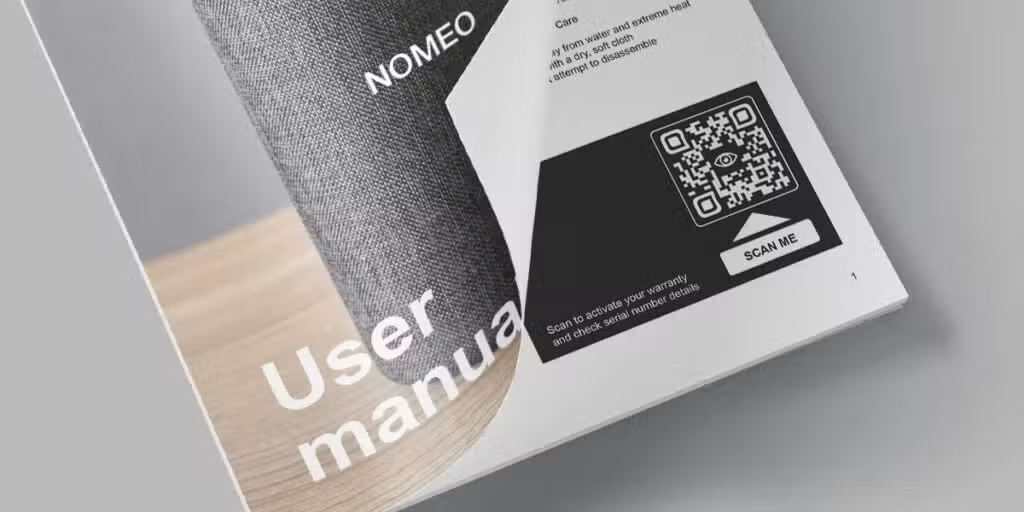
With a serialized QR code, the person who scans can see their registration from the links provided and avoid typing in long numbers and filling out forms.
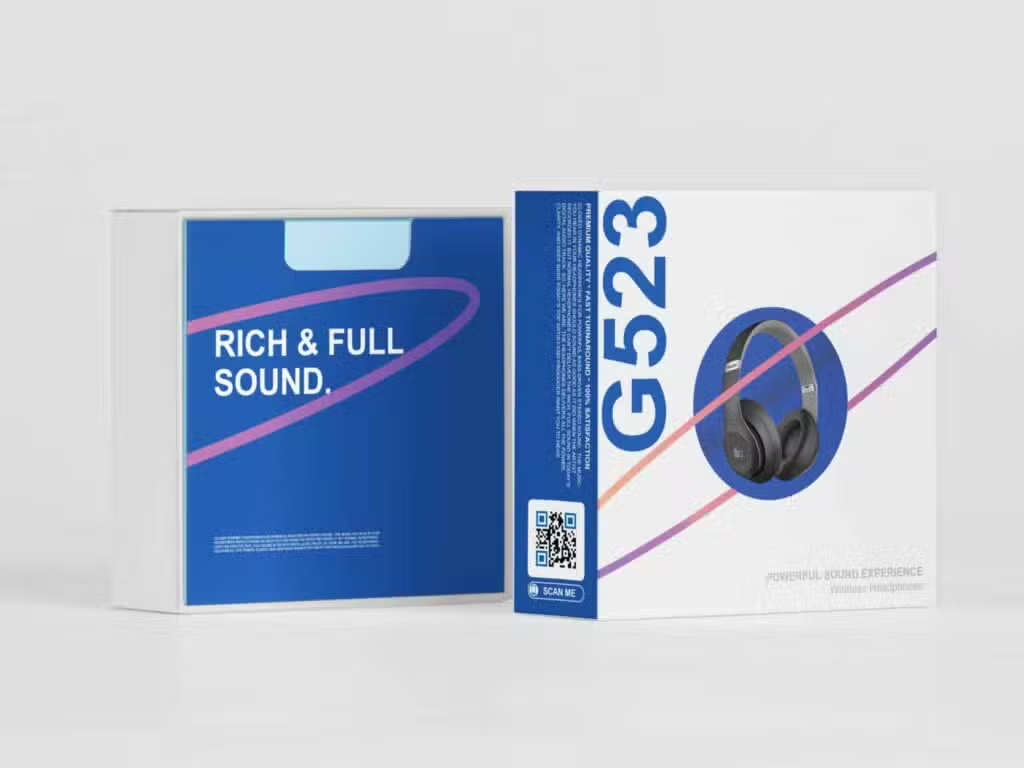
Practical examples of using QR codes with serial numbers
In addition to our examples above, we’ll expand into how other industries are scanning to their advantage.
Product servicing and maintenance
Technicians and customers alike can access product instruction manuals, service history, replacement parts, or maintenance instructions.
Rental equipment and/or asset management
Unique QR code identifiers enable companies to track check-outs, returns, inspections, and maintenance history of the equipment. This can also go for office equipment, building maintenance, and more.
Event tickets and credentials
Add serial numbers to itemized QR codes that direct to credentials that can’t be duplicated, like certificates hosted on a website, or event tickets that could be falsified and need to be validated when the QR code is scanned.

Give every product a digital identity
And give every consumer a personalized experience while enhancing supply chain and retail operations. Try Trueqrcode QR Code Generator and start with a SKU that needs individual serial numbers for each unit.
For more information, check out why everyone is getting on board with our free downloadable: Getting Ready for GS1 Sunrise 2027: A Simple Checklist.
