GS1 Digital Link QR Codes vs. Regular QR Codes: What’s the Difference?
 Kristin IrishUpdated 6 min read
Due to the demands of supply chain traceability, GS1 regulations, and consumer curiosity, smart packaging will take over traditional barcode usage. Sunrise 2027 is an industry-led transition into removing regular barcodes and QR codes from cluttered packaging and combining necessary information for suppliers, regulators, and consumers into one matrix.
What is a GS1 Digital Link QR Code?
A GS1 Digital Link QR Code is a QR code that contains GS1 data like a Global Trade Item Number (GTIN), which is called a UPC in the USA or an EAN in Europe (those numbers under a barcode).
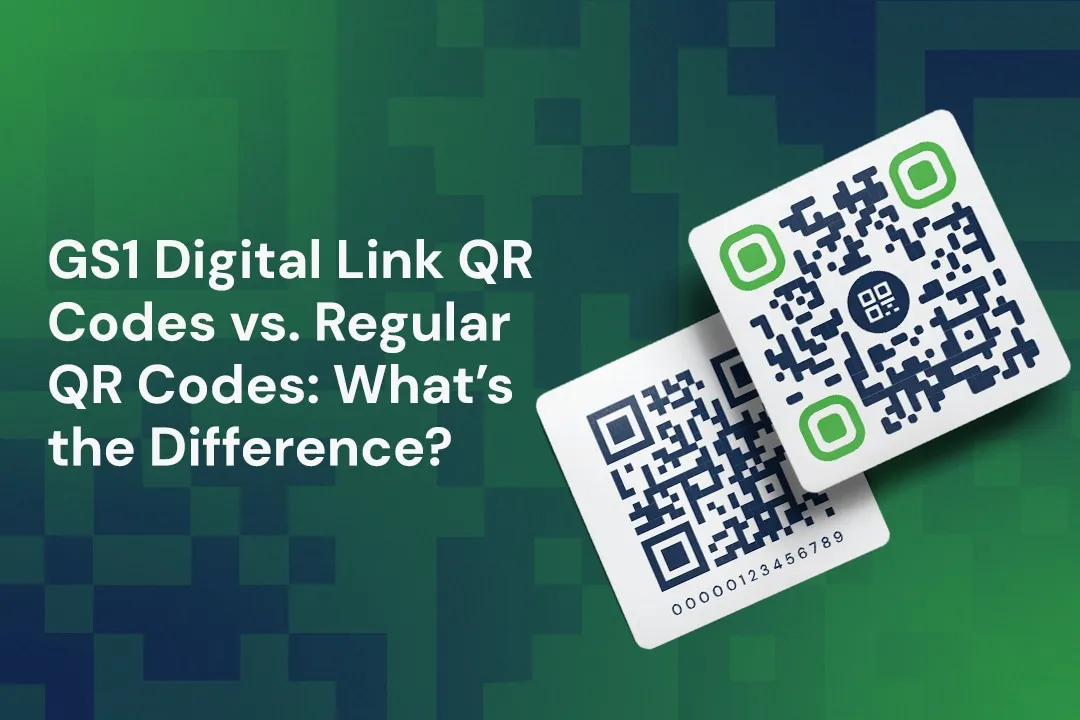
First, we’ll show you the difference between a regular QR code and a GS1 Digital Link QR Code:
A GS1 Digital Link QR Code goes by many names
- In this article, you can learn how to make a GS1-approved QR code by turning a GTIN barcode into a GS1 Digital Link QR Code.
- A QR code barcode is just a GS1 Digital Link QR Code. You can read here about why you need them before 2027.
- A Barcode QR Code is just a GS1 Digital Link QR Code. Discover what it is here!
- Here you can learn the difference between an EAN vs. GTIN. An EAN is just a Global Trade Item Number (GTIN) in Europe.
- Here you can learn the difference between a UPC (USA), EAN, and GTIN. And you guessed it! A GTIN QR Code is another name for a GS1 Digital Link QR Code!
- 2D barcodes are yet another name for GS1 Digital Link QR Codes. Read about why brands are switching from one-dimensional (traditional) barcodes, to 2D codes here.
- This article gives useful insights about creating a 2D barcode for retail. It’s just about retail specifically, but it derives from, yes, a GS1 Digital Link QR Code!
- If you would like to create your own, visit our barcode QR code generator and try it out.
Why use regular QR codes?
Regular QR codes just hold information that is on a grid with 3 eyes or corners. A Data Matrix code uses an L-shaped border. They can both be used for GS1 purposes, but QR codes are more common. A QR code can hold up to 4,296 alphanumeric characters while a Data Matrix can hold up to 2,335 alphanumeric characters. We’ll focus on QR codes however, in this article.
- Static QR codes can’t be edited. You can add a URL, contact information, a WiFi password, etc.
- Dynamic QR codes can be edited and have more possibilities for adding multiple links, landing pages, and tracking, which are better for QR code marketing campaigns.
You would use a normal QR code for various use cases and industries to distribute content. Whether you upload a PDF file too big to email, create multiple QR codes at once for larger campaigns or batch-level or item-level codes, make a QR code for multiple links that provide a QR code landing page for the audience to choose from, etc., you can utilize QR code technology in a way that is best for you.
Why do we need a GS1 Digital Link QR Code?
It’s important to have all product information in one place. GS1 Digital Link QR Codes have a landing page with multiple links where supply chain workers and end consumers can look up necessary information. In the supply chain, URLs included might route to updated shipping information or a recall warning. For end consumers, there could be ingredients, instructions, discounts, tutorials, and anything else the product’s URL contains.
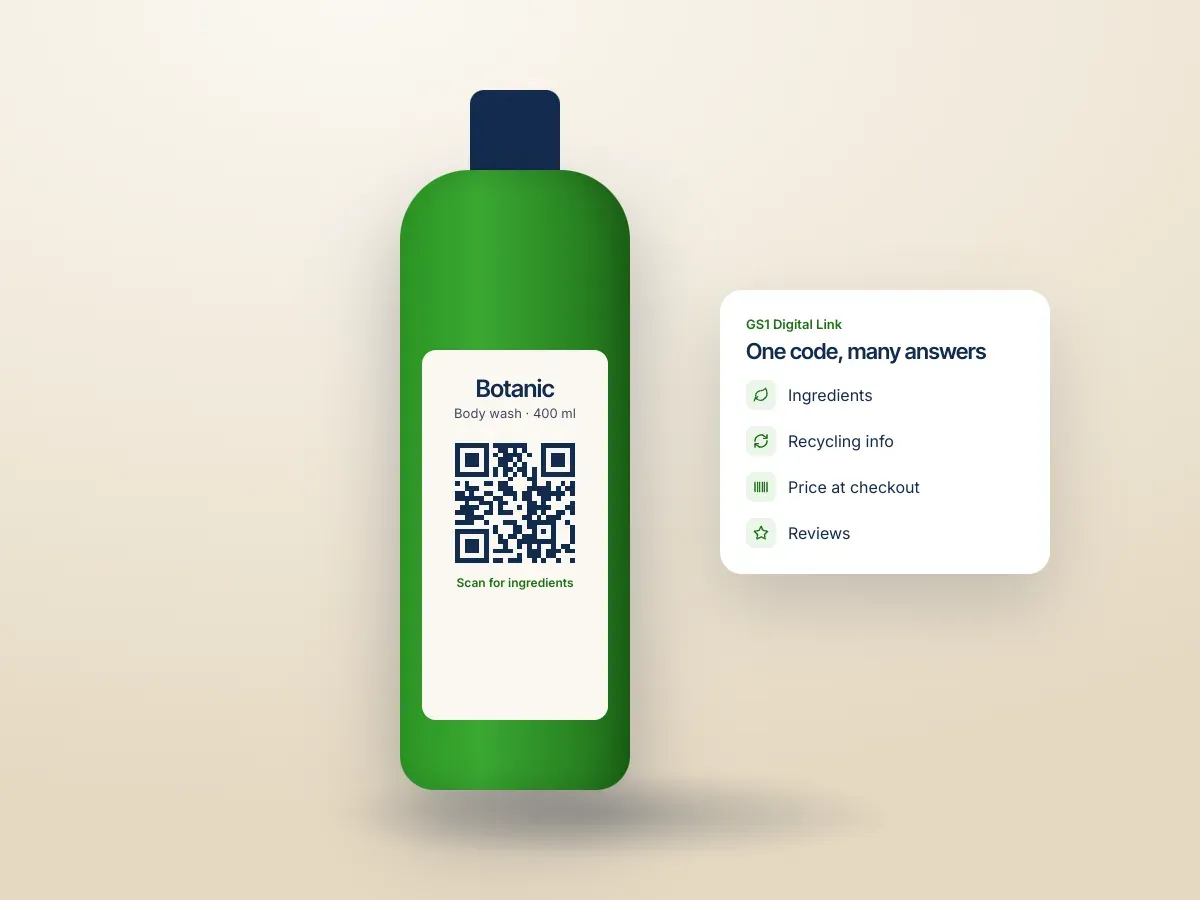
Besides the landing page, what pops up immediately after scanning that is useful for supply chain workers could be information embedded in the code itself such as:
- Batch number
- Serial number
- Expiration date
- Manufacturing data
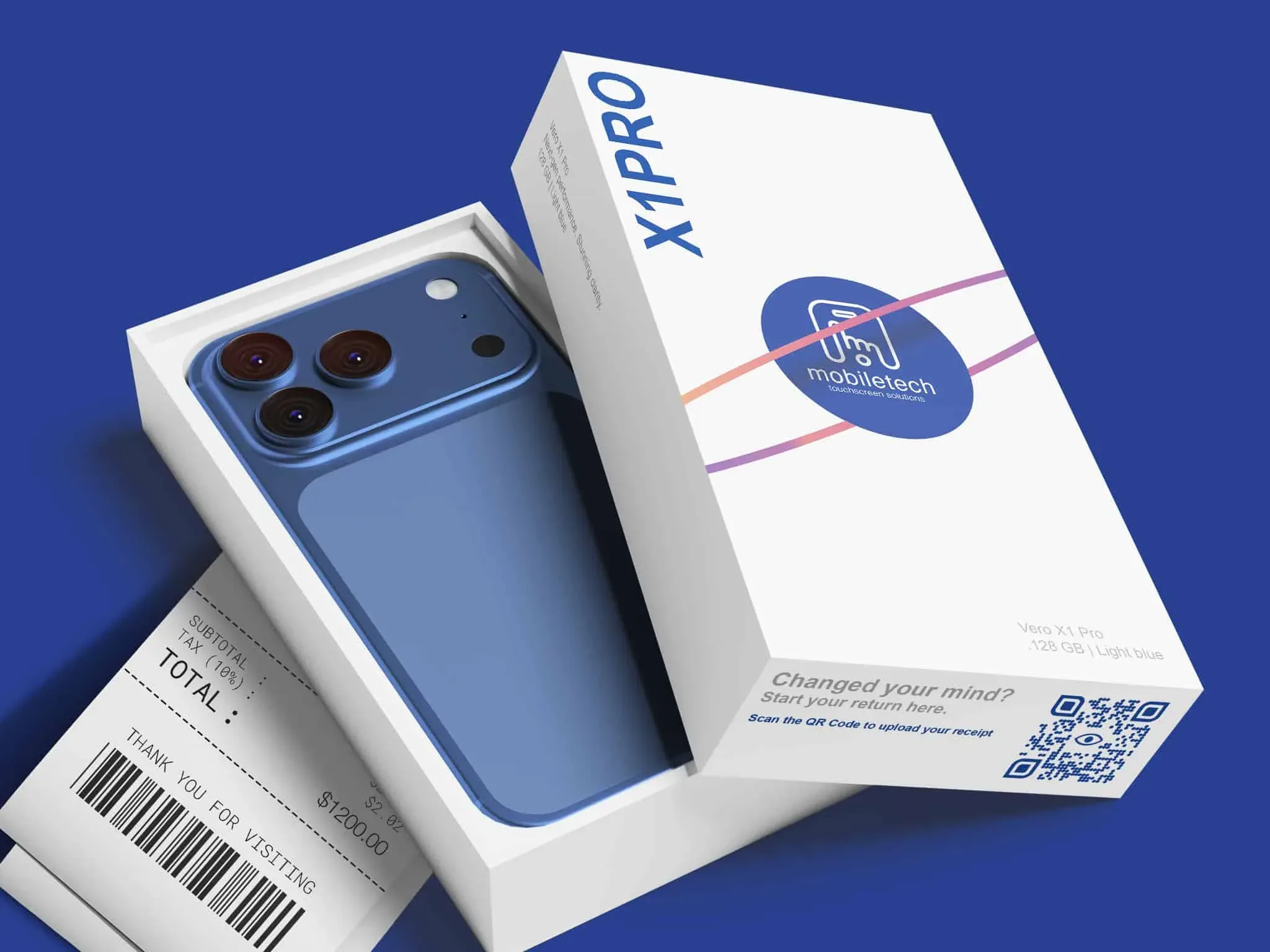
By adding a GS1-approved QR code, brands can add the GTIN, meaning they don’t have to print a traditional barcode and a QR code next to each other on packaging anymore. The GS1 Digital Link QR Code can be scanned at the point of sale (POS), whereas a regular QR code cannot be. And that makes the need for one-dimensional, older barcodes non-existent.
Why everyone benefits from GS1 Digital Link QR Code technology
GS1 stands for “Global Standards 1,” which means that there is an international system for product identification across supply chains. They are a nonprofit group that manages the standards of barcodes and data, and issues GTINs, as they invented UPCs and EANs as well.
Benefits of GTINs
- They lessen the number of fake or stolen products being sold internationally.
- They make products more searchable.
- Accurate product identification means less confusion between colors, sizes, SKUs, etc.
- Supply chain visibility is improved as products move.
- They are globally compatible, making them convenient for international shipping, purchasing, and satisfying various regional regulations.
- Brands and consumers can trace affected products that have been recalled.
How do you separate information between the supply chain, regulators, and customers using a resolver service?
A resolver service can differentiate between users because of the device scanning the code. The resolver checks rules such as:
- Who is making the request?
- What type of scanner or application is being used?
- Where is the scan coming from?
- What language or country is the user in?
The resolver then directs the party to the appropriate information.
Adding a resolver service to QR code technology enables brands to separate that information when the code is scanned and direct scanners to the information that’s necessary for them. If not, all of the information would be stored on one webpage for everyone to see.
To sum up:
- Use one GS1 Digital Link QR Code
- Add the information necessary from A-Z
- Use a resolver service that will direct scanners to appropriate content
Key takeaways
A GS1 Digital Link QR Code takes customers to important product information and identifies products with a GTIN, making traditional barcodes obsolete and improving smart packaging. They can:
- Identify a product, batch, or item
- Be scanned at a POS
- Enable tracking
- Support product authenticity
- Give recall warnings when scanned
- Help manage inventory
- Satisfy regulations
- Provide customers with more content
This is why GS1 Digital Link QR Codes are becoming the preferred choice for product packaging: they combine consumer engagement with standardized product identification in a single, scannable code.
Frequently Asked Questions
What’s the difference between a GS1 Digital Link QR Code and a regular QR code?
A GS1 Digital Link QR Code is for items with a GTIN that are being sold. A regular QR code can be for any other use when sharing content.
Can any smartphone scan a GS1 Digital Link QR Code?
Yes. Any smartphone can scan it as they would with a regular QR code. So can devices from compatible business systems across the supply chain.
Do I need to create a GS1 Digital Link QR Code?
Because of the transition in 2027, it would be best to start now. Try it with a couple of products and your GTIN. You can be flexible about how you manage and build them based on the product information you want to include.
Should I use a GS1 Digital Link QR Code or a regular QR code?
If you’re selling products, you should use a GS1 Digital Link QR Code on them. For anything that doesn’t have a GTIN, like product instruction manuals, guest WiFi passwords, QR codes on table tents, and the list goes on, use a regular QR code.
Can a GS1 Digital Link QR Code replace a traditional barcode?
Yes. That’s the point of Sunrise 2027. To combine QR code technology with barcode technology, to make one super code which makes smart packaging even better!