By 2027, the GS1 Organization will transition the marketplace from traditional barcodes to QR codes that hold a GS1 Digital Link. Deemed Sunrise 2027, this transition will enable supply chains to go beyond just scanning regular barcodes at points of sale (POS), to scanning barcode QR codes, which will contain much more information for regulators and end consumers, as well as the supply chain.
A QR code is a machine-readable, scannable code consisting of a matrix of squares used for storing URLs and readable information. A QR code can hold a maximum of
7,089 numeric digits, 4,296 alphanumeric characters, or 2,953 bytes (for binary/byte data).
A 2D barcode is another name for a code that stores data in a matrix (horizontally and vertically), which holds more information in characters than an original 1D barcode.
Therefore, a QR code can be a 2D barcode and vice versa. We’ll use those terms interchangeably here.
A GTIN (Global Trade Item Number), EAN (European Article Number), or UPC (Universal Product Code), used in North America, is a unique number for products.
The GTIN is the overall system that is accepted all over the world. The GS1 Organization describes it as, “A GS1 GTIN™ is a unique, global, verifiable product identifier issued by GS1 used to uniquely distinguish your products.” This is the number you see under traditional barcodes.
They vary in digits and formats, but are mainly:
EAN – 13 digits (GTIN-13)
UPC – 12 digits (GTIN-12)
Who benefits from creating a GTIN QR code for products with a GS1 Digital Link?
The benefits and who benefits from using a QR code with a GTIN and GS1 Digital Link are varied. We’ll take a look at how putting all of your product information into one QR code benefits all audiences in the product lifecycle:
For supply chain managers: Streamlining the source of the information into a simple dynamic QR code will make supply chain processes easier, quicker, more organized, and editable so brands can track information in real-time, opening another viable avenue for logistics, recalls, and transparency.
For end consumers: What is more, brands can now have end consumers interact in one scan, allowing them to see ingredients, allergen information, register warranties for serialized high-end goods, see beautiful landing pages with promos and tutorials, sign-ups, follow social media channels, and more.
For regulators: Another benefit of printing QR codes on product packaging is that brands maintain compliance. With regional laws and regulations about what information is to be stored on packaging, and with consumer demands regarding their sustainability expectations, companies are forced to stick to eco-certifications, ESG standards, ethics developments, proofs of origin, etc., on packaging; but the catch is, do it in less space!
Since dynamic QR codes are editable on the backend without reprinting the physical code, all stakeholders gain the necessary information in real-time.
This is why GTIN QR codes are perfect. They are powerful, tiny, editable, and link to URLs that store tons of information for everyone involved in the products’ process.
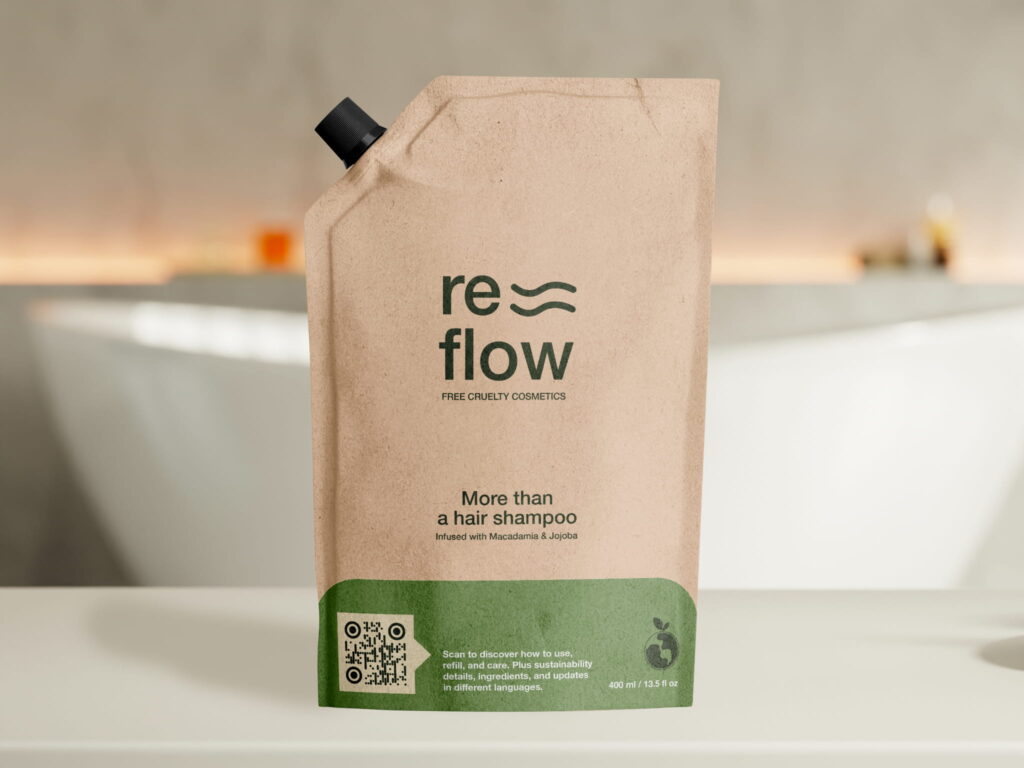
The advantages of creating a QR code for products with a GS1 Digital Link vs. 1D barcodes
Dynamic QR codes are editable. When the information changes, it can be updated on the backend without reprinting the physical code.
QR code designs maintain brand consistency. Your QR code design and QR code logo will foster consumer trust, knowing the packaging is authentic and adds value with digital content.
Sustainability is increased through smart packaging. You add a lot of information to QR codes that you can’t add to a barcode.
Smaller packaging + more information = Maximum sustainability.
QR codes are compliant. With US FDA and EU regulations on food and pharmaceuticals, QR codes are being encouraged by governments worldwide. Disclosing the information necessary to sell these products is more sustainable to put in a landing page with a QR code than printing out paper and putting it in packaging. Moreover, languages can be changed by region in landing pages, also mitigating paper use.
QR codes centralize multi-faced information. QR codes cater to different audiences; therefore the information stored will vary. 1D barcodes can’t support information about what happens in the entire product lifecycle, like 2D barcodes can.
Consumer engagement is increased with QR codes. Packaging can display a web address or Instagram handle, but it’s more convenient for busy consumers to scan a QR code and be directed to social media channels immediately.
How can we transition from 1D barcodes to QR codes for GS1 Digital Link purposes?
GS1 QR codes will eventually combine all of the information necessary on packaging. This will declutter the look of the packaging and keep the information more organized. Sunrise 2027 will phase out 1D barcodes, and here’s what to do to make the transition:
- Become a GS1 member. You can establish that on their website.
- Register GTINs and structure your GS1 Digital Link URLs.
- Use Trueqrcode as your QR code generator and input your GTINs into the QR codes you create.
- Get a resolver service to set up redirect logic for different types of users. A redirect resolver for QR codes with Digital Links is a service (or piece of software) that receives a scanned URL and decides where to send the user next, based on rules, context, or standards: most commonly GS1 Digital Link. This means that if you’re a supply chain worker, a regulator, or a customer, you’ll be directed to the right place. You don’t need special knowledge. Just give the resolver the information they ask you for, and they do the rest.
- Work with retailers and tech providers to update POS compatibility. Traditional 1D barcode scanners can’t scan a 2D barcode but, most technologies now, including smartphone cameras, can even scan a 2D barcode without having special apps set up.
There are a few things to set up in the beginning, but the ROI is worth it. After that, the protocol will become second nature when adding a digital link to a QR code for a new product. That’s why it’s important to transition now and adjust to the new system ahead. Overall, it will save time, labor, and costs.
Try Trueqrcode QR code generator and experience how easy it is to create a GTIN QR code. Start generating GS1-ready QR codes today and future-proof your products in minutes.
