QR Codes for Logistics and International Shipping

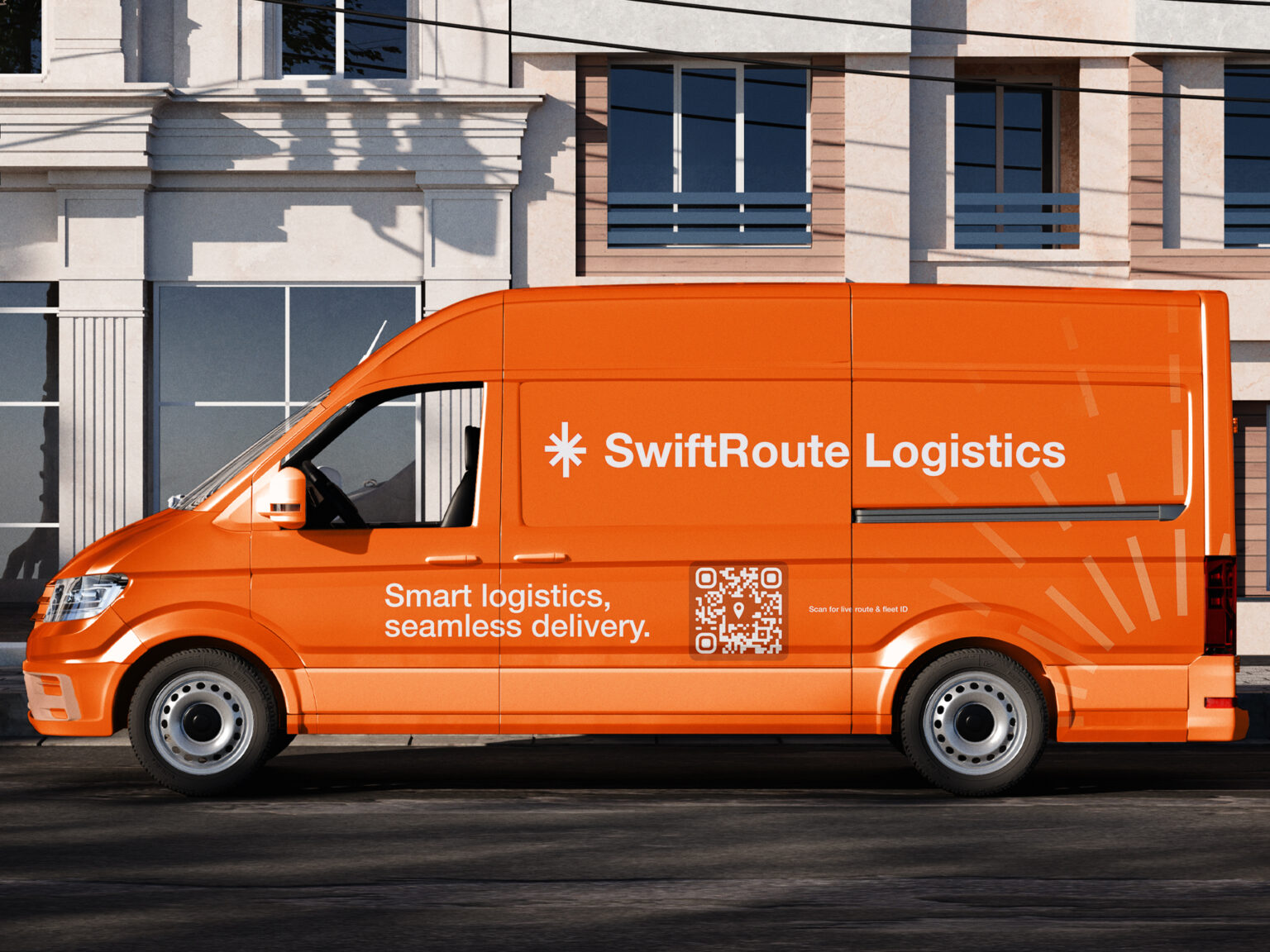
An orange logistics van with a QR code on it, parked outside of homes waiting to make a delivery.
An orange box with a QR code on it, stacked on top of another box, on a warehouse floor with shadows.

Supply chains and retailers are transitioning from traditional barcodes to 2D barcodes with Sunrise 2027 on the horizon. It’s an industry-led initiative encouraged by the GS1 organization to utilize QR code technology in lieu of one-dimensional barcodes so supply chains, regulators, and final consumers can all benefit from a single code. However, using a GTIN barcode is not the only QR code you can use.

B2B shipping for products like engineering parts would not need the same type of B2C QR code as a barcode for cosmetic products. You could still use a QR code generator for multiple links that displays information you need to move materials.

The benefits of using a QR code for logistics and international shipping

Since QR codes offer more data capacity than traditional barcodes, the benefits are clear. Depending on the type of material you’re shipping, your needs, the supply chain, whether it’s a B2B or B2C shipment or product, the way that you manage your QR code will vary. The versatility of Multi-Link QR Codes, and the other types we offer in addition to GS1-Approved QR Codes, ensures that you can manage your shipments every step of the way.

One code for multiple audiences centralizes information

QR codes that offer multiple links come with a QR code landing page that is in a linktree style format. You can update the URLs behind links that confirm when the order has been picked up, where the shipment is in transit, trans-docking facilities, any stockholdings they may reach, and confirmation of delivery at the final location. By taking copies of documents and uploading them to URLs that link to your QR code, you mitigate confusion, and in case of a missing or damaged domestic document, you have backups. It’s necessary by law to keep all international documents in hard copy but this gives an extra backup for clarity and peace of mind internally in difficult transits.

Multiple link format for clear organization

Whether it’s a QR code with a GS1 Digital Link or a Multi-Link QR Code, the QR code landing page is clearly organized so nothing will get lost or confused. The linktree format makes it simple for those who don’t work with computers, like truck drivers, or those who work on the docks, to just scan the code and see the information they need without needing more equipment than a smartphone or the scanners they already have.

Dynamic QR codes are editable

It’s necessary to update the code as you move materials. You would actually be updating your URLs on the backend, and you wouldn’t need to change the physical code. This is why QR codes with multiple links are dynamic vs. static QR codes. QR codes for logistics, as well as QR codes for inventory management, require frequent updates.

Smart packaging is compliant and convenient

This is where it gets tricky. If you’re shipping a B2C product and you put the QR code on product packaging. However, you may consider a different QR code on boxes and pallets than on product packaging, if the information and organization are better understood that way. Through planning, trial and error, and process improvement, you’ll find a routine that works for you. That’s also why it’s better to begin the process sooner rather than later of creating QR codes for retail, or other industries

A QR code for a shipping label, like FedEx, would mean using their system. They already print a QR code on their own shipping labels. The QR codes we are referring to would be across your supply chain, managing your internal systems but also sharing documentation with necessary parties.

Smartphones can translate any information they are given

When shipping overseas, you need to have a device that’s going to translate documents directly. There’s no time for error, miscommunications, or going back and forth between computers and physical shipping places. Scanning a QR code with a smartphone or tablet that enables you to translate what you need directly saves time, energy, and costs from mistakes that could have been made.

API integrations streamline operations management

For large-scale operations, like ecommerce, API integrations are available if you’re interested in tech teams taking it one step further to automate certain operations. Using QR codes with API integrations in logistics allows systems (warehouse software, transport apps, ERPs, etc.) to exchange data instantly when a code is scanned. This helps automate tracking, inventory updates, shipment status, and document retrieval.

While creating QR codes doesn’t require tech experience, when you’re moving large-scale operations, the initial setup of automating operations is well worth it in the long term. It saves so much time and energy. Some examples of companies already using it are: Amazon warehouse scanning, DHL parcel tracking, Maersk container tracking, and those regarding pharmaceutical serialization systems.

How to create a QR code for logistics and international shipping

By now, you’re probably wondering how long this will take and how hard it is to do. It’s not so much more time-consuming than incorporating barcodes in your normal packaging. If you’re using a GTIN, just add it to the GS1-Approved QR Code field. For all codes, you’ll be prompted to do the following. There’s really no tech experience required unless you’re performing API integrations, and large-scale firms have a tech person on hand to execute such details. Whether it’s your marketing team, procurement team, or anyone else, here’s how to create a QR code for logistics and international shipping:

  1. Go to Trueqrcode QR code generator and choose the barcode QR code or multi-link QR code option. These two are really the best for this purpose. They both offer multiple links for all of your needs. The only difference is that you’ll input a GTIN into the former.
  2. Add your header, links, and social media channels if you want to the places you are prompted. You’ll design your QR code landing page here. It’s simple to add company colors and upload an image of your product for assurance. Click the next button at the bottom of the screen.
  3. Now, customize QR codes however you see fit. If you’re placing them on product packaging for B2C products, we recommend using a QR code logo with your branded, contrasted colors that suit your packaging design. You should even do the same with B2B materials and larger materials, to make them stand out in busy warehouses, docks, and stockholdings. 
  4. Download your QR code and do a test scan. It is mandatory to know that the links are correct and that it actually scans. Be sure the size is appropriate and noticeable on packaging and that it’s not printed on curves, folds, and creases. Also, do a test print on one package before making multiples. 
  5. Do consider where you’ll be printing the code. If you put it where no one can get to it to scan, like at the top of a tall machine, or inside a box where no one will see it, or only on one side of a pallet instead of all sides, it will get covered in transits and warehouses. You must ask the logistics department about where the code will be most useful and you may have to print it on several sides of materials. Shipping staff cannot be turning around materials searching for hidden codes they may not know exist, or even if they do.
  6. You can analyze your QR code if QR code tracking is useful for you. You’ll discover what you need down the line. Since you can see what cities, times, days, and on what devices your code was scanned, this is telling as to where your material actually is if no one has informed you. 
A yellow sign with a QR code on the side of a pallet rack.
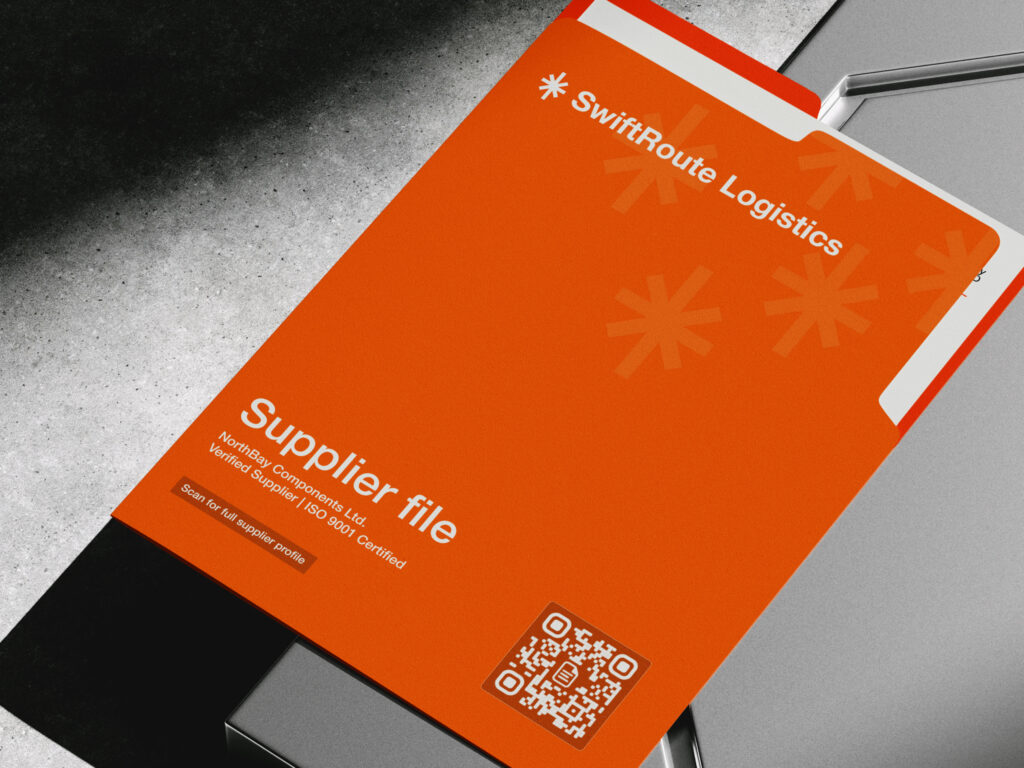
An orange supplier file folder with a QR code on it.

Best practices for using QR codes for logistics and international shipping

Shipping and logistics professionals know what is best to streamline operations. Adding QR codes just assists them in accessing information at rapid speed. 

Create QR codes for inventory management

When scanned, QR codes for inventory management can tell warehouse staff where each product and pallet are, how much stock is available, and movement history. You may even include when new stock will be arriving. This simplifies stock checks and reduces human error.

Use QR codes for tracking orders and traceability

When track and trace is done in real time and is updated in links to the QR code, anyone scanning can get the most recent information. This reduces having to call office staff to check computers and give updates by phone or email. Logistics teams and regulators benefit from time savings and cost savings.

Create QR codes in bulk for serialization

For authenticating luxury and high-end products like electronics, QR code serialization and registration is the way to go using a bulk QR code generator. Item-level QR codes help mitigate counterfeits and raise red flags. Although there is no tracking device on QR codes, analytics will tell you time, place, and device scanning.

Make QR codes with multiple links to documents

International shipping requires a lot of documentation, and the originals cannot be misplaced or the cargo will not be accepted into the country. However, when logistics teams want real-time updates internally, the backups of these documents uploaded to a URL can be linked to QR codes. A QR code for multiple links reduces delays waiting for emails and phone calls.

Utilize GS1 Digital Links satisfy supply chain visibility

QR codes with GS1 Digital Links are the turning point of supply chain visibility. You would include your GTIN, batch numbers if it were a batch-level QR code, expiry dates, and other pertinent information that comes up immediately. Depending on what scanning device is used, a resolver service would send that person to the right information. This allows manufacturers, truckers, DCs, regulations teams, consumers, etc., to see what’s necessary for them, using a centralized digital asset.

Tips for using QR codes for logistics and international shipping

For your optimum QR code effectiveness, keep these tips in mind.

Think about the problems you need to solve proactively

What information do you need to include throughout your logistics process? Logistics and procurement teams know their entire supply chain, and foolproofing it in advance is a key element to success. The procedures will change over time and flexibility is important. Dynamic QR codes are editable, so the information that you will add in the long term will manifest as you realize who needs what and how the technology is best utilized for your supply chain.

Take placement into account regarding product packaging vs. shipping

This one is huge. Let’s look at some examples. If you have an ecommerce store or a food producer, you’re going to ship LTL on pallets. QR codes on food packaging are not going to be the same as those on a pallet. The tiny food packages in boxes, on pallets, in reefer trucks will not get scanned by drivers. Logistics companies have their own QR codes for shipping labels. However, some companies that have their own trucks, like grocery stores, will use a different system. You’ll have to place physical codes where they’ll be seen and scanned according to that audience. 

On the other hand, for something like large engineering parts too big to ship in containers overseas, you can put the same QR code on each component so that the serial numbers are not switched and mistaken when loading up trucks and cross docking them in stock holdings. You would also need to print it in different places on the base since it’s large and not easy to get to, so it can be scanned anywhere.

Consider who will be creating the QR code

This is based on packaging, marketing, logistics teams, how big your corporation is, who your audience is, and how much you’re shipping. Don’t make it the only job that role does because monotony equals mistakes. The information stored has to be correct and checked. Narrow QR code creation down to one person or the least amount of people you can, to avoid mistakes and duplicates. People think QR codes don’t work when the problem is disorganization.

Test your QR code before launching

Test once before printing. Make sure all of the links go to where you want them to. Of course, you’ll add more links as you go along but at least the first ones and that the information that comes up on the landing page and initial scan are correct. 

Test again on one printed material. This will vary depending on what you’re shipping and where. You need to know the code will actually scan where you placed it. Ensure there’s white space around it and that the eyes (corners) aren’t obstructed. QR codes can be scanned with up to 30% damage as long as it’s not in the corners. You also need to take wear and tear into account. It may scratch off easily in transit.

Add your company logo to the QR codes

Whether dealing with other stakeholders in the supply chain or end consumers, your company logo maintains branding consistency and calls attention to your packaging. It’s proven amongst consumers through analytics that QR codes with logos simply perform better. It also stands out amongst warehouse staff looking for one of your shipments.

FAQs

These are the most frequently asked questions and their answers about using QR codes for logistics and international shipping.

Since they can store more data and links than 1D barcodes, they can be used for tracking numbers, batch numbers, package content, track and trace details, handling instructions, order information, and information regarding the product stored in URLs that are on QR code landing pages.

When they are scanned at different destinations, systems that are integrated can update shipping status in real time.

As any importer knows, physical Original Bill of Ladings are necessary to ship overseas, or your material won’t legally enter the port. While taking a screen shot in a stored URL seems like enough, it will not clear customs. However, other documentation (and you will always need hard copies from A to Z) can be scanned and uploaded to URLs linked to the QR code if you need the entire supply chain to see the paperwork. The hard copies always stay with one entity, depending on your supply chain.

We suggest a different QR code on B2C individual products. The QR code landing page will have marketing-directed links like tutorials and stories about the brand, ingredients, discounts, etc. The boxes and pallets will have different types of QR codes. Depending on the way your store or ecommerce shop operates, the track and trace would be with a common carrier and they utilize separate systems, also with QR codes. Inbound (manufacturer to store) and outbound (store to customer) logistics will be different. You can use one QR code from A to Z if you’re shipping something like a windmill B2B, and you need hard copies.