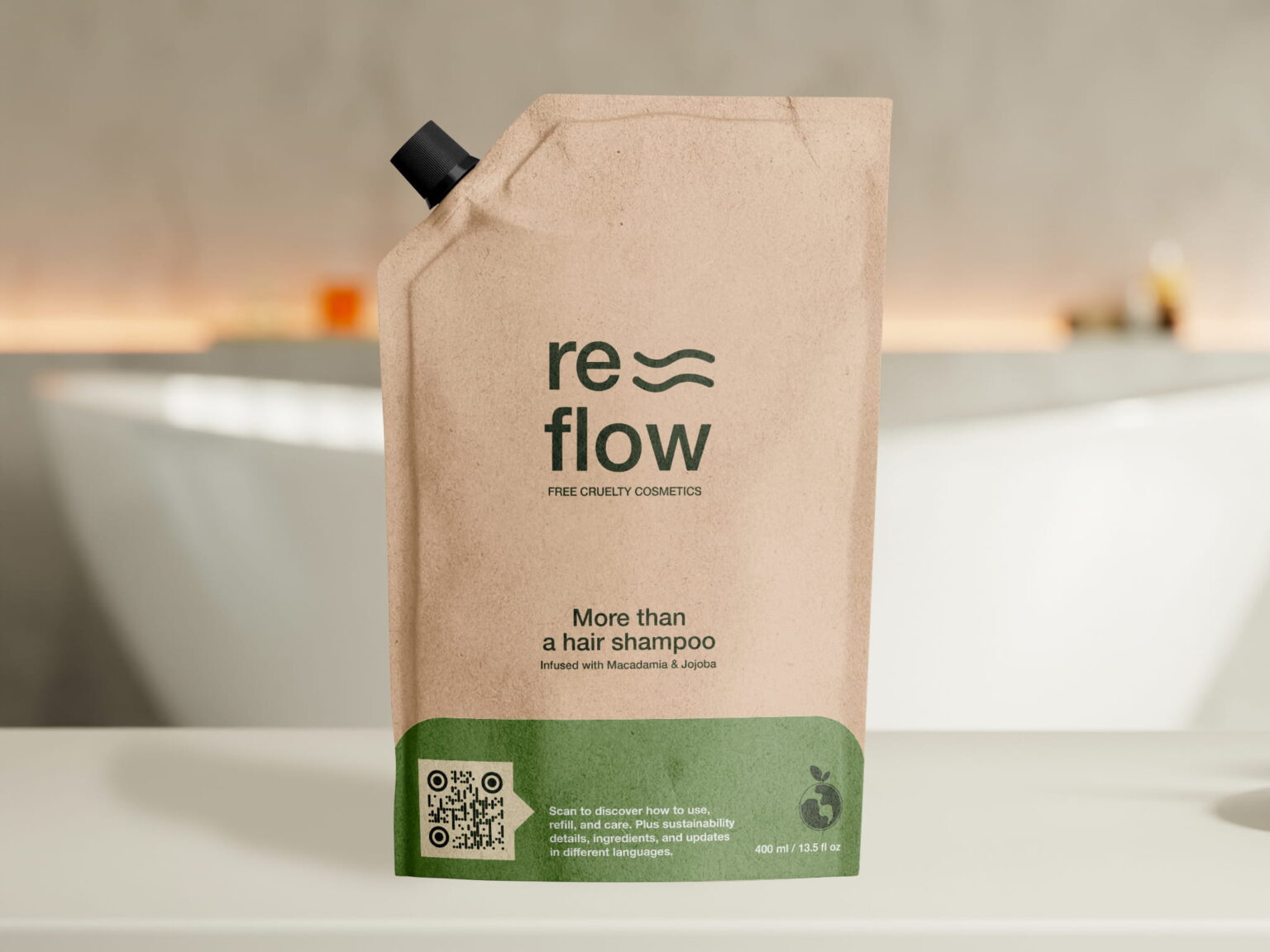
GS1 Digital Link for Cosmetics & Beauty

GS1 Digital Link for Cosmetics & Beauty - Use case 3

If you want to maintain your competitive edge in the cosmetics industry regarding digital technology and marketing, then a barcode QR code is the way to go. It is easy to do, streamlines diverse information in one code for various audiences, and there are no developer requirements.

But why is it necessary? We’ll check out the reasons everyone is making the switch and why it’s a must-have for brands and consumers.

Benefits of a GS1 Digital Link Barcode for Cosmetic Products

A QR code barcode for cosmetic products is the fastest and most effective way to share information with various audiences in one scan. To please the demands of supply chain logistics efficiency, regulators looking for specific information, and customers who want sustainability and knowledge at once, all in tiny packaging, the only solution is a QR code. 

GS1 Digital Links are necessary for Sunrise 2027

This industry-led trend by GS1, a non-profit-organization that has maintained standards for barcodes and GTINs across the world, has designated “Sunrise 2027” as its latest transition forward regarding product identification. In past years, we have seen traditional barcodes side by side with QR codes, we’ll now combine them for one 2D barcode that enables brands to provide more information than ever, improving transparency, logistics, and marketing in one code.

GS1 standards are international

When running an international cosmetics company, packaging, industry standards, import/export laws, consumers’ standards, etc., get complicated. With a GS1 Digital Link embedded in a QR code barcode for cosmetic products, brands can store information for various stakeholders in one code. Adding a resolver service means that when someone scans the GS1 Digital Link, the resolver interprets the device and redirects it to the right digital resource (product page, traceability API, etc.). The resolver is a separate software from a QR code generator, but it isn’t complicated to use and streamlines your processes and packaging for enhanced sustainability and transparency.

Smart packaging is the most practical way to adhere to regulations

As a normal barcode for cosmetic products can’t hold much information, beauty companies have started to rely on QR codes for various reasons. For example, in the EU, labelling requirements are stricter than in other regions. Since beauty packaging is so small, it’s difficult to claim a brand is sustainable when carrying heaps of information in extra packaging, only for the actual information, not even the product. Imagine buying a lipstick that came with a large box and a long paper and ink print out full of regulatory and allergen information! Not only will no one read all of that, but it’s not sustainable.

A QR code barcode for cosmetic products can increase marketing engagement

QR code marketing is the newest way to share valuable content in all forms, including virtual reality experiences linked to URLs, social media channels to follow, adding digital promotions, and more. Marketing engagement increases significantly with QR codes because of the ease of scanning and the convenience of being directed to various sites instead of needing to search for them alone. 

GS1 QR codes can be created in bulk

You can use one QR code for each product, and most cosmetics brands do this. This is called a “product-level” QR code and is used by large corporations to share information with large numbers of people. 

“Batch-level QR codes” can be practical because they include a batch number if it’s necessary for the brand or consumers. 

“Item-level” QR codes are not normally used for cosmetics.

Creating QR codes in bulk can be done by uploading information to a .csv file (a spreadsheet), to Trueqrcode’s bulk QR code generator. We include the spreadsheet template in the creator.

How to Create a GS1 Digital Link Barcode for Cosmetic Products

After seeing the benefits and discovering that this is the most effective solution for packaging and content sharing, we’ll show you how to create a GS1 QR code barcode for cosmetic products, whether it be in bulk or at product-level.

Step 1: Go to Trueqrcode’s QR code generator and choose the barcode QR code generator option, which is GS1 compliant. 

Step 2: Add your GTIN for a single code or choose the bulk creation option. Trueqrcode will provide the .csv sample for you to download and fill in. Then you will edit and upload your new .csv. 

Step 3: Add your header, links, and socials for increased customer engagement.

Step 4: Customize your QR code design with branded, contrasted colors and upload a QR code logo in the center for brand recognition and awareness.

Step 5: Use your downloaded QR code in your cosmetic packaging design. Always do test scans with multiple devices before and after printing a test code on beauty packaging, (please print on one test package before printing thousands), to make sure it has the correct information, links, and that the packaging has not obstructed the code by size, curves, shine, and other issues that are easy to avoid but may come up. Information can always be changed on the backend since it’s a dynamic QR code, but physical obstruction must be prevented. Moreover, it’s professional in front of the audience to get it right the first time.

Step 6: QR code tracking can be done in your analytics dashboard. It will tell you the number of scans, cities, times, and on what devices the codes were scanned. Depending on your goals, these analytics will help you in the long and short term.

GS1 Digital Link for Cosmetics & Beauty - Use case 3
GS1 Digital Link for Cosmetics & Beauty - Use case 4

Best Practices of Using a GS1 Digital Link Barcode for Cosmetic Products

Discover the best ways to utilize your barcode for cosmetic products to experience optimal use across every audience!

Provide personalized beauty recommendations and reorder links

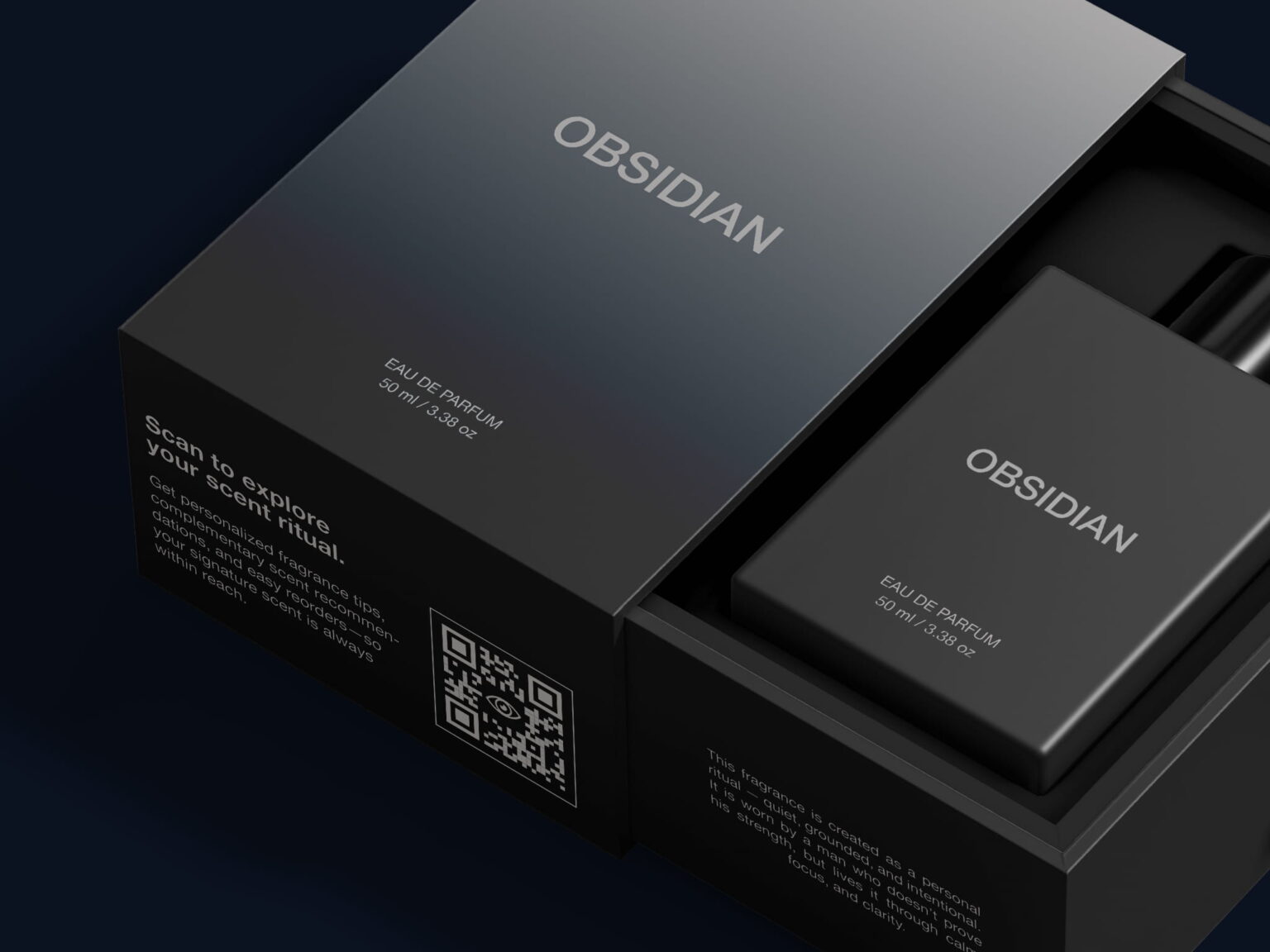
By adding targeted marketing strategies to your QR code, when customers scan to redirected links, they can see additional beauty advice according to their purchase, get promotions for other products they like, or complimentary products to those they have already purchased. This is particularly important for reorder links that customers can subscribe to, so their purchases keep coming before they run out.

Add links to virtual reality experiences

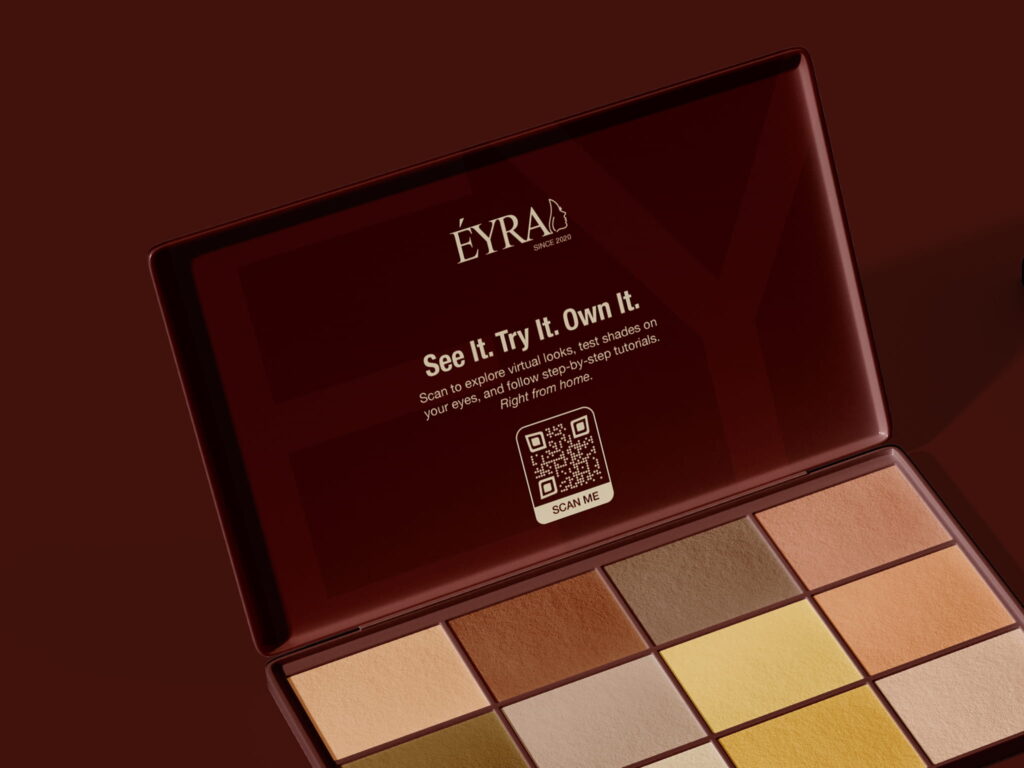
It’s fun to go to the store and try on makeup, but what if we could apply different colors or see interesting techniques with tutorials from home? Add links with amazing landing pages to QR codes to discover virtual beauty experiences that entice people to scan.

Be consistent with branding across packaging materials

Brand consistency enhances consumer loyalty. When they know what to expect and have a positive experience, they will come back for more and recommend their friends. So when beauty packaging offers sustainability, and enhanced experiences after buying the product, it becomes part of the normal protocol incorporated into the product, not just an add on. It also benefits internal consumers to receive important content in their own language regarding instructions and allergen information.

Add your brand mission and origin story

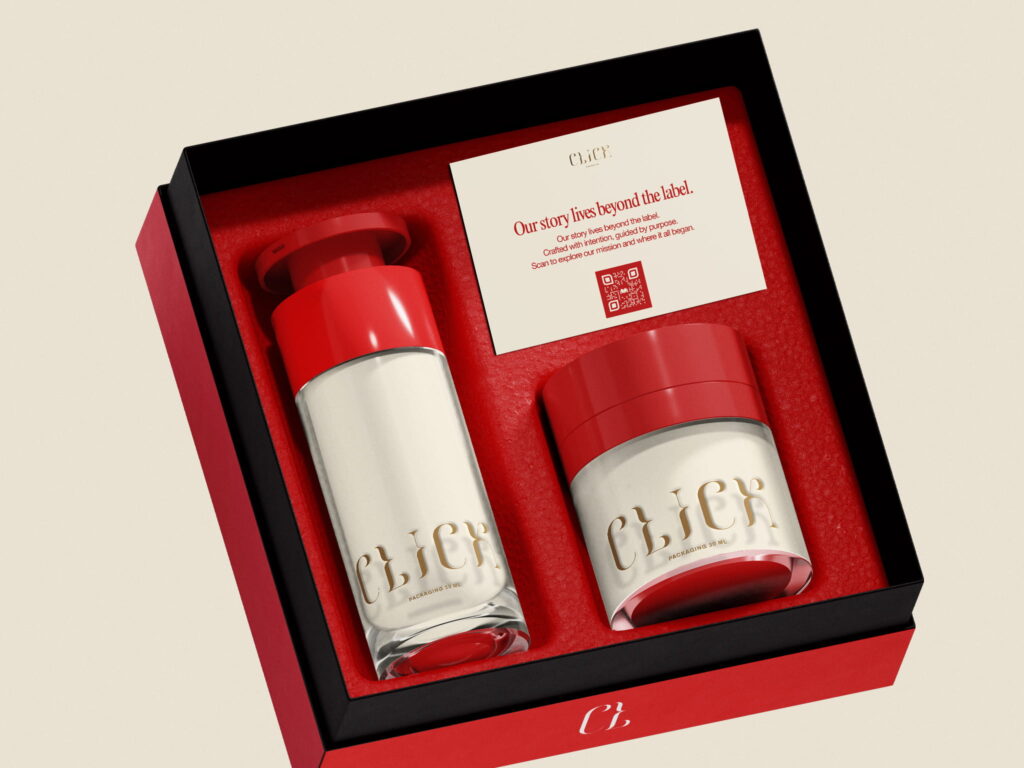
Stand out from the rest and tell people why you do what you do! Create landing pages that are linked to your QR codes and show customers who you are. Your origin story and brand mission matter, and they are part of a meaningful brand experience which makes customers become more loyal to you. Your purpose and values humanize your product. This is especially appealing to Gen Z and Millennial shoppers!

Edit content on the backend without reprinting dynamic QR codes

If you want to change your marketing strategy for a holiday promotion, or if new tutorials about a product were made, you can edit the QR code on the backend without reprinting the code. Therefore, your packaging will still keep its classic look, but now the product has something new to offer. 

What is more, beauty brands have the ability to update ingredient lists and claims anytime, so if there is a new eco-certification, or a change in the ingredients for a product at a later date, the company can convey that without disrupting the physical packaging again.

Support sustainability claims and enhance transparency

This is fantastic for the end consumer and regulatory departments that want proof that the company is cruelty-free, maybe even vegan, ethical, and eco-friendly. GS1 Digital Link QR codes enable brands to link more information than traditional barcodes to enhance transparency. 

Additionally, for products that possess frequent variants, transparency is increased when consumers can see positive changes being made over time in the products they have purchased.

Improved product identification

The GS1 Digital Link is GTIN-based, so it’s used internationally and decreases the complications of SKU proliferation for supply chains. It works with various types of scanners, POS, and mobile phones so those functions are redirected to the correct information for that scan. 

Tips for Adding a GS1 Digital Link Barcode to Cosmetic Products

Customize your QR code for eye-catching brand expression

Consumers are more inclined to scan a QR code when there is a consistent visual identity across packaging and marketing channels. When your barcode for cosmetic products persuades consumers to scan with a clear call to action, maintains your branded colors and brand logo, and delivers interesting, value-added content through beautifully branded landing pages, you can be sure that people will keep scanning.

Keep product data off the QR code and store it in a PIM/MDM or GS1 resolver

When the QR code scans the GTIN, your server looks up that GTIN in your PIM/MDM, and this returns full product data like: ingredients, allergens, images, language-specific information, promotions, certificates, recall alerts, etc. Don’t embed all of that directly into the QR code; keep it clean and allow more space for other important information. 

Add things directly to the code that include a human readable interpretation (HRI) such as:

GTIN: 09506000123452

Batch: ABC123

Use Before: 2025-05-01

A GS1 Digital Link barcode for cosmetic products needs to be convenient to scan

Not only will people not try scanning again and again if the QR code doesn’t work, but it won’t work if the size of the code isn’t 10 mm × 10 mm (0.4” × 0.4”) for good scanners and at least 13–15 mm preferred for consumer mobile phones. 

Also, keep a ≥ 6–8 mm quiet zone (white area) around the QR code.

Don’t print them on seams, folds, and curves of packaging materials.

Use contrasted colors that you can incorporate into your branded colors, or the code won’t scan with neutrals or similar hues. 

Use a resolver instead of direct URLs embedded in your 2D barcode for cosmetic products

A GS1 Digital Link resolver allows brands to:

  • update product data dynamically
  • redirect scans by geography
  • support multiple languages
  • enable recall warnings
  • track item-level authentication
  • change content after printing

This is crucial for a barcode for cosmetic products, where information could change regarding beauty tutorials, selling products in new countries, holiday promotions, etc.

Consider bulk QR code generation only if needed

A product-level barcode for cosmetic products is the expected industry standard. You normally do not need item-level codes for general beauty products. Itemized serialization is typically reserved for luxury goods. Bulk QR code generation at the batch-level could be practical because if there is a recall or quality issue, it’s easier to identify products that may be affected by a specific batch.

Try Trueqrcode’s QR code generator and start with the Brand Story QR Pack! What does it include?

  • Your brand mission story, including your inspiration and values.
  • Clear statements about sustainability, including cruelty-free and vegan status goods, and your community impact.

Enticing CTAs to scan the QR code, such as a tutorial, a request to follow their community channels, or a resubscribe link.

FAQ

Most frequent questions and answers

A GS1 Digital Link is a standard that encodes existing GS1 identifiers (like the GTIN) into a web-addressable URL (a URI), which can then be embedded in a 2D barcode (e.g., a QR Code) or other carriers.

The GS1 Digital Link can link to a lot of information like ingredients, instructions, safety precautions, recall information, procurement and logistics information, beauty tutorials, tips, promotions, and anything that enhances traceability and functionality.

It will enable the 1D and 2D barcode to become one smart barcode. Right now, QR codes and conventional barcodes are coupled on packaging. The GS1 Digital Link enables brands to combine the information in a 2D code like a QR code.

Absolutely! As long as the QR code is big enough to scan on the product packaging, and it is in contrasted colors with nothing blocking the corners, then it’s compatible.

Nope! Dynamic QR codes can be updated on the backend without physical reprints. This makes GS1 Digital Links the most up-to-date resource in supply chain data sharing thus far.

Absolutely! And depending on the device, the resolver will redirect the scanner to the appropriate information for that audience.

Trueqrcode’s QR code generator, a resolver, and any device that will scan a QR code!

They’re not mandatory, but with Sunrise 2027 approaching, EU cosmetics regulations, and the demands of sustainability from consumers all over the world, it’s best to start preparing now for the upcoming industry-led changes.

Product-level or batch-level barcodes for cosmetic products are the industry standard.