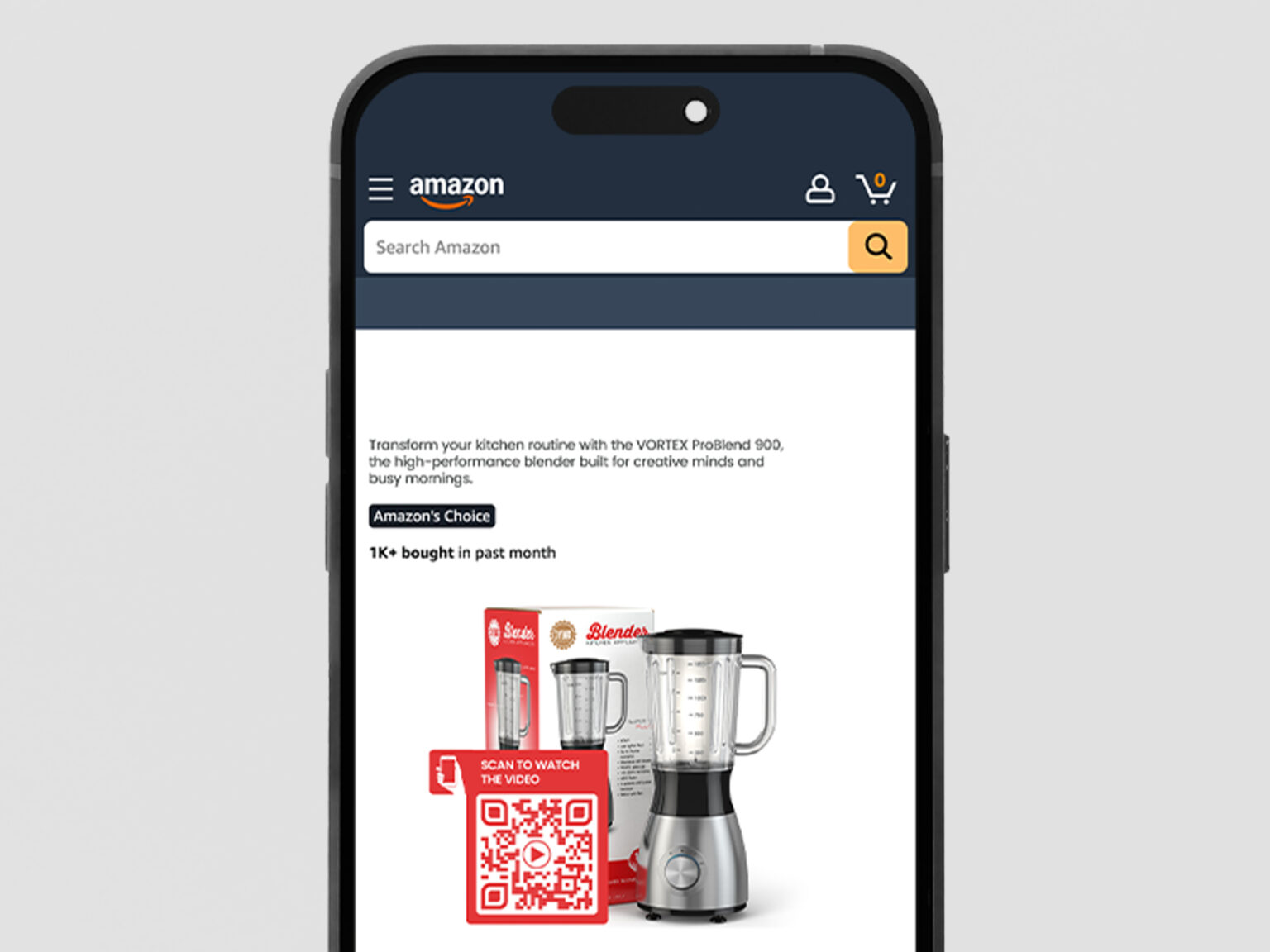
GS1 Digital Link for E-Commerce & D2C Brands

Barcode QR Code
Product Information Manuals as PDF QR Codes

Turn every product into a post-purchase touchpoint that increases repeat purchases.

With growing consumer demands, and the desire to reduce the amount of packaging we use, QR codes with GS1 Digital Links solve the problem of having less physical space and supplying more digital information in real-time. To satisfy the needs of the supply chain, international regulations, and the end user, only 2D barcodes will suffice.

If you’re looking for a channel that goes beyond traditional barcodes, turning a one-time customer into a loyal consumer, and strong brand recognition and awareness combined with community growth, a QR code with a GS1 Digital Link is the way to go.

Benefits of a GS1 Digital Link for E-Commerce & D2C Brands

Every product package becomes a digital asset

Since GS1 Digital Links connect multi faceted information like GTINs, beautiful landing pages, unique product IDs, and more, your packaging is no longer one-dimensional. Packaging doesn’t only protect a product anymore, it gives a value-added experience to the end user while streamlining supply chain operations and satisfying regulations with information about regional standards. What is more, with one scan, customers can repeat purchases, and that difference is indispensable for ecommerce and D2C brands.

QR codes are powerful for shorter product runs

Learn about customer needs with QR code marketing and adapt to the current market with surveys and feedback that are gold for ecommerce and D2C markets. This is insightful information before creating larger product runs because consumer responses navigate your path to success. For example, if 80% of buyers who took the time to respond wanted a lighter fabric, this would be telling for the next product run. 

Brands can also include run numbers, batch numbers, manufacture dates, and any other pertinent information in their QR codes.

Integration with CRM, email, and loyalty apps

QR codes with dynamic digital links act as a connective layer between physical products and a brand’s digital stack, seamlessly integrating ecommerce and DTC companies with CRM, email, and loyalty platforms. When a customer scans a code on packaging, they can be identified, tagged, or segmented in the CRM, triggered into automated email or SMS flows, and enrolled in loyalty or referral programs, all from a single interaction. This creates a direct, brand-owned data loop that unifies post-purchase engagement, personalization, and retention across systems without adding friction or relying on paid channels.

QR codes with GS1 Digital Links are a low-friction setup

Customer effort and brand-side complexity are decreased at the same time. For customers, scanning is an instant process that conveniently directs them to interesting landing pages, virtual reality experiences, tutorials, repeat purchase options, subscriptions, and more. 

Since dynamic QR codes are editable on the backend without reprinting physical codes, brands can update destinations, landing pages, social media channels, holiday promotions, etc. This positions ecommerce and D2C brands for obtaining lifelong customers in addition to one-time buyers.

Control of your content in real-time

QR codes with GS1 Digital Links create clear business advantages for ecommerce and D2C brands. They enable a new recurring revenue stream through meaningful landing pages that you create, setting you up for more subscribers, usage-based pricing, and value-added digital services, in lieu of only one-time transactions. Additionally, there is no operational overhead, since the underlying QR code technology is hosted by Trueqrcode. This empowers ecommerce and D2C brands to offer a high-value digital solution to their customers without needing to maintain the infrastructure themselves, other than content updates, enabling brands full freedom and control of their codes and content with no tech hindrances.

How to Create a GS1 Digital Link for E-Commerce & D2C Brands

Discover how simple it is to implement a barcode QR code with a GS1 Digital Link into your packaging:

Step 1: Go to Trueqrcode’s QR code generator and choose the barcode QR code generator option, which is GS1 compliant. 

Step 2: Add your GTIN for a single code or choose the bulk creation option. 

For bulk creation, Trueqrcode will provide the .csv sample for you to download and fill in. Then you will edit and upload your new .csv. 

Step 3: Add your header, links, and socials to gain repeat customers and attract loyal followers.

Step 4: Customize your QR code design with branded, contrasted colors and upload a QR code logo in the center for brand recognition and awareness.

Step 5: Use your downloaded QR code in your packaging design. Always do test scans with multiple devices before and after printing a test code on packaging, (please print on one test package before printing thousands), to make sure it has the correct information, links, and that the packaging has not obstructed the code by size, curves, shine, and other issues that are easy to avoid, but may come up. Information can always be changed on the backend since it’s a dynamic QR code. 

Step 6: QR code tracking can be done in your analytics dashboard. It will tell you the number of scans, cities, times, and on what devices the codes were scanned. Depending on your goals, these analytics will help you in the long and short term.

GS1 Digital Link for E-Commerce & D2C Brands
Static QR code

Best Practices of Using a GS1 Digital Link for E-Commerce & D2C Brands

Increase post-purchase engagement

Brands can convert one-time buyers into loyal customers by having them follow social media channels, subscribe to email promotions, sign up for other programs, or even capture emails from packaging directly if they choose to share them. They can also join waiting lists for new product runs, building excitement and curiosity. 

Not only can you provide links to repeat purchasing options, but you can also include virtual reality experiences, try-ons, add tutorial updates from YouTube, and more. Any links that you embed into the QR code are another value-added experience to foster brand loyalty and trust. Post-purchase engagement increases significantly when a clear call-to-action and a compelling reason to scan make the customer’s experience more convenient, driving repeat sales and revenue.

Maintain brand consistency with every scan

Using a customizable QR code with a GS1 Digital Link and integrated QR code logo on packaging ensures that every scan delivers a consistent, branded experience. This approach empowers brands to maintain visual consistency across all touchpoints, reinforcing trust and strengthening long-term customer relationships, turning packaging into a memorable, interactive brand experience.

Be prepared for Sunrise 2027

Sunrise 2027 is the new industry-led trend by GS1, the global organization that standardized and manages traditional barcodes. This trend is shifting the industry from 1D barcodes now being printed side-by-side with QR codes on packaging, into 2D barcodes or QR codes that carry both sides of the information. This is necessary for regulatory compliance in multiple regions to publicly disclose information about products and their origins, as well as meeting the demands of conscious consumers. Since this trend has begun to take off already, brands have been making the switch to 2D barcodes to mitigate having two or three separate codes on packaging, which can appear cluttered or possibly confusing to people scanning. 

Track every product from the point of manufacture to the end user

By using a resolver that identifies the type of device scanning the code, each product has a unique digital identifier like a digital product passport, that follows it from the manufacturer into the hands of the end consumer. Since the QR code with a GS1 Digital Link encompasses real-time information updated on the backend, the same code can be scanned at different stages of the product’s lifecycle, making tracking easier for procurement, logistics, and end consumers.

Improve recall management

There are three types of QR codes for products:

  • A product-level QR code 
  • Batch-level QR codes that include a batch number
  • Item-level QR codes that include a batch and serial number 


The last two can be created with Trueqrcode’s bulk QR code generator

If an issue has been discovered within a batch number, brands can identify the affected products and update the QR code with proper instructions, whether it be for inventory management or for consumers who have already purchased. 

Since QR codes do not capture information from mobile phones, this will not push notify consumers. When the QR code is scanned again, a customer would see the recall. Therefore, this does not take away traditional ways of notifying customers of recalls.  

However, QR code technology is especially useful for compliance and inventory within the supply chain or in distribution centers where the codes are being scanned again and again in large factories, warehouses, and superstores, where staff are not sat in front of the computer. 

Tips for Adding a GS1 Digital Link for E-Commerce & D2C Brands

Keep the QR code clean and store detailed information in a PIM/MDM or GS1 resolver

When the QR code scans the GTIN, your server looks up that GTIN in your PIM/MDM, and this returns full product data like language-specific information, images, promotions, certificates, recall alerts, etc. Don’t embed all of that directly into the QR code; keep it clean and allow more space for other important information. 

Add things directly to the code that include a human-readable interpretation (HRI), such as:

GTIN: 09506000123452

Batch: ABC123

Use Before: 2025-05-01

QR codes with GS1 Digital Links need to be the correct size to scan

QR codes work if the size of the code is at least 10 mm × 10 mm (0.4” × 0.4”) for good scanners and at least 13–15 mm preferred for consumer mobile phones. 

Keep a ≥ 6–8 mm quiet zone (white area) around the QR code.

Don’t print QR codes on seams, folds, and curves of packaging materials.

Use contrasted colors that you can incorporate into your branded colors, or the code won’t scan with neutrals or similar hues. 

Test scan on one package before printing on every package.

Create QR codes in bulk when necessary

Bulk QR code generation should be done for products like luxury goods and electronics for serialization purposes. These would be item-level QR codes, with links to registration or warranties, to mitigate counterfeiting or theft. This is also good for brand authenticity when linked to real, certifiable landing pages, because those, too, can be duplicated. 

There are also batch-level QR codes with batch numbers. Imagine adding a batch or lot number to a product-level QR code (one code for a product, not every item distributed of the product). This mid-level QR code is not as detailed as an item-level QR code. It’s good for finding other affected items during a recall or for any specific information beneficial to the brand selling the product for their R&D purposes.

Promote transparency, satisfying regulators, and conscious consumers

The GS1 Digital Link can direct to energy labels, sustainability certifications, safety precautions, and certifications, how to discard products without contaminating the environment, ethical practice information, origin stories, and more. 

With new regulations coming out every year regarding sustainability and consumers demanding more information about the history of the brand, adding transparent information to your QR code enables you to show who you are as a company while satisfying regulatory compliance, all in one scan.

Turn your product packaging into a digital, value-added experience that fosters growth, drives repeat sales, boosts engagement, and maintains customer loyalty. Try Trueqrcode’s QR code generator with a GS1 Digital Link and experience the difference that your packaging can make today.

FAQ

Most frequent questions and answers

A GS1 Digital Link turns a standard product barcode or QR code into a universal, web-enabled URL, connecting physical products to digital experiences like videos, product info, loyalty programs, and more.

Brands can add contrasted, branded colors, choose different design features, and upload custom logos, maintaining brand consistency and identity across packaging and marketing channels.

By linking to unboxing videos, tutorials, warranty registration, loyalty programs, email capture, or subscription offers, QR codes turn packaging into an interactive touchpoint that drives repeat sales and customer loyalty.

Yes, all dynamic QR codes can be edited on the backend, making it the perfect solution to GS1 Digital Link information that is updated in real-time.

Absolutely. Scans can trigger automated workflows in your CRM, capture emails, enroll customers in loyalty programs, or feed data into marketing automation systems, all while tracking engagement per product or batch.

Brands benefit from higher customer engagement, improved customer data, loyalty growth, repeat purchases, and operational efficiencies like easier recalls or product feedback, turning packaging into a measurable growth channel, not just physical product protection.